
On View at the Discovery Museum March 1 – August 2, 2026
Included with museum admission.
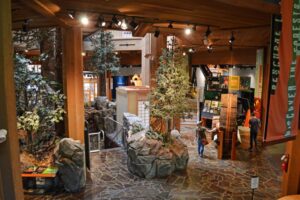
Forest Hope Through Innovation is an interdisciplinary art-forest-science exhibition at World Forestry Center’s Discovery Museum that explores how creativity, research, and community action can shape a sustainable future for the forests we rely on.
Featuring work by more than twelve innovators, the exhibition highlights the aesthetics of emerging forest-based research—from technology and engineering to design and artist-scientist collaborations.
Each contributor approaches forest health in unexpected and thought-provoking ways.
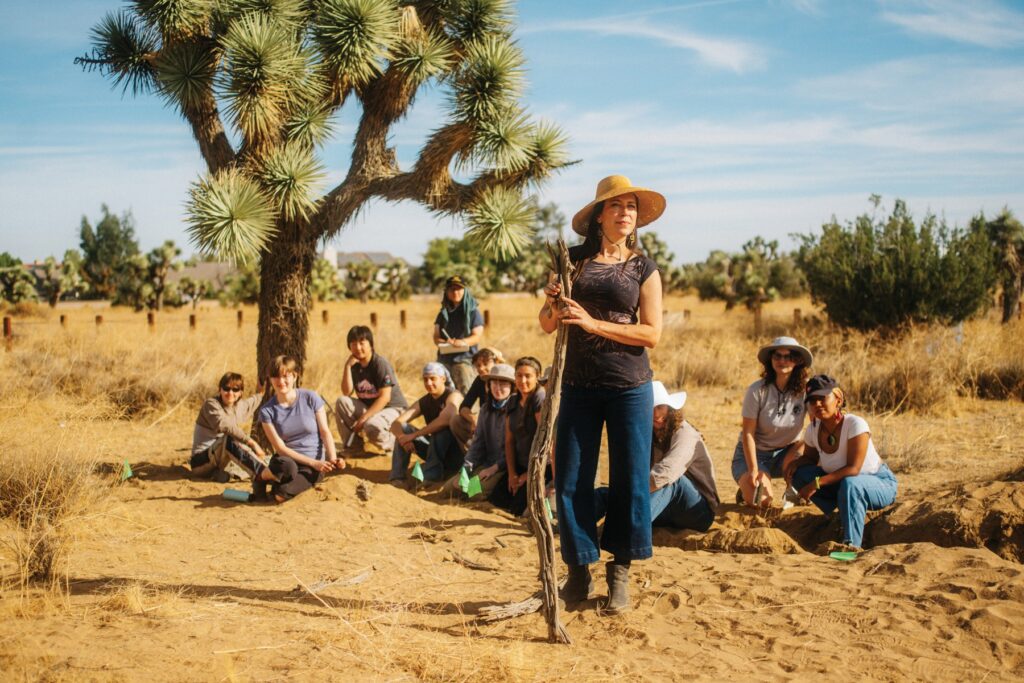
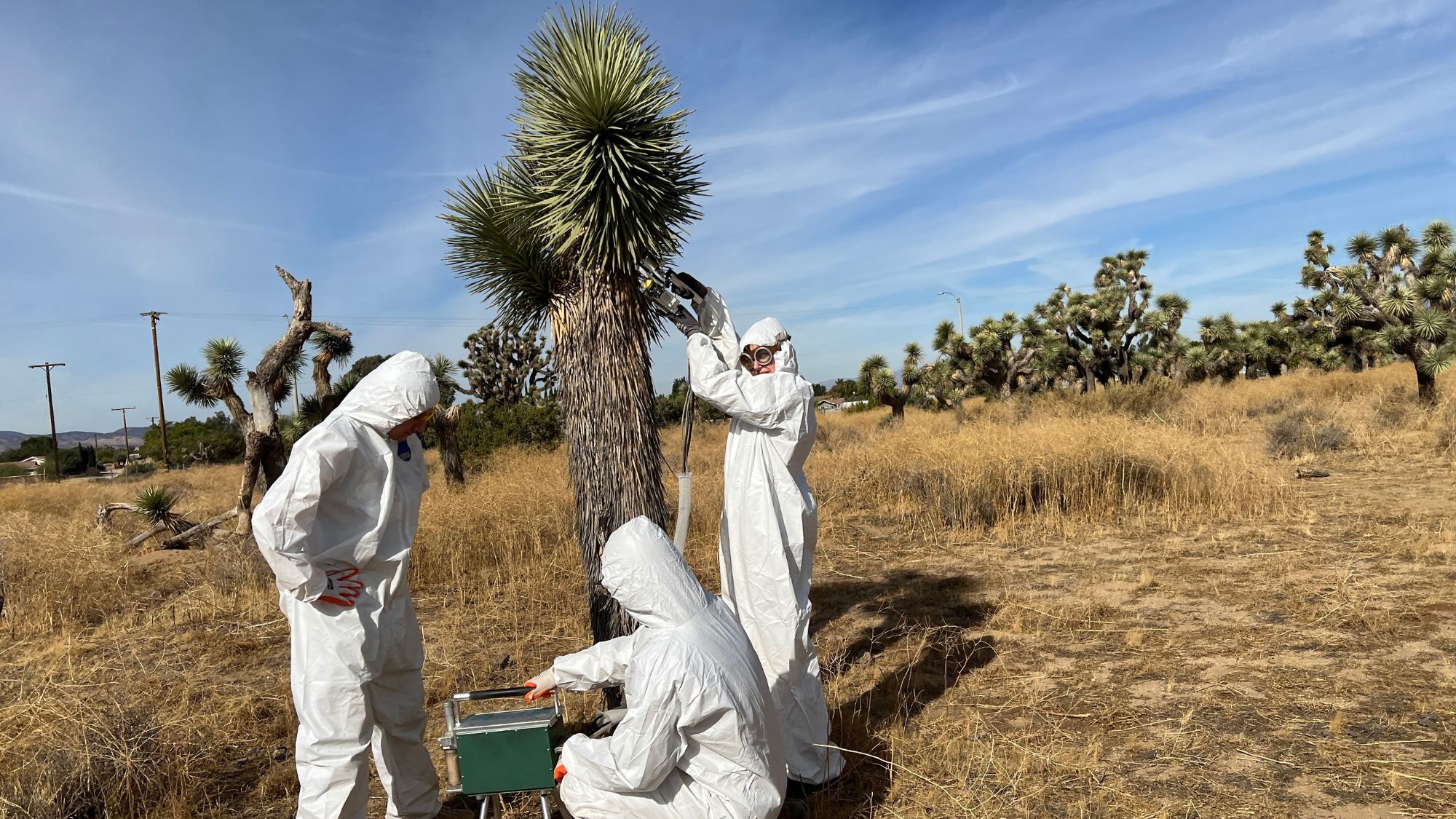
Professor Juniper Harrower and REED college students (and Marvin the Joshua tree) performing research at Prime Desert Woodland Preserve. Photograph by Elizabeth Weinberg
Works range from research studies, new technology, experimental forest management practices, visual art and community science projects to products developed in material science labs, and art-science collaborative fieldwork.
By displaying research happening behind the scenes in labs and incubator-like spaces, Forest Hope Through Innovation becomes both a gallery and a public facing living laboratory. Visitors are encouraged to engage actively with the work, ask questions, and consider their own role in shaping forest-climate solutions. The exhibition fosters curiosity and problem-solving, reinforcing the belief that everyone can contribute to the long-term health of our forests.
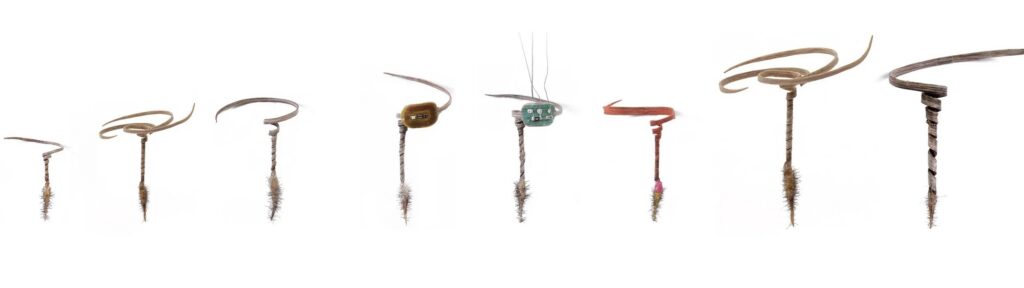
E-SEED: Self-burying Seed Carrier
Exhibition Themes
Innovative Research & Technology
Discover how new tools and research methods are helping us understand and protect forest ecosystems.
- E-SEEDS – Future Seeding Initiative and Morphing Matter Lab, UC Berkeley A biodegradable, wood-based spiral seed carrier inspired by the Erodium plant. Designed to self-bury into soil, this project blends material science, engineering, and nature-inspired design to support reforestation and planetary wellbeing. Led by Lining Yao and the Morphing Matter Lab team.
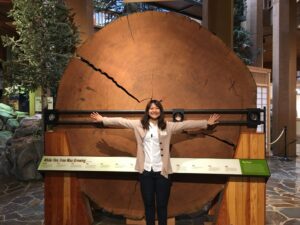
- Tree Ring Lab – Oregon State University Tree cross-sections reveal centuries of climate, fire, and human history. This long-term research reframes fire as a vital ecological process and highlights Indigenous fire stewardship practices that shaped resilient forests long before modern fire suppression.
- AirDNA – Tessa Chesonis, OSU College of Forestry A non-invasive method for studying wildlife by collecting airborne environmental DNA. This innovative research improves how scientists monitor forest animals, especially rare and hard-to-detect species, supporting healthier ecosystem management.
- Dendrometers – Christopher Still, OSU College of Forestry New electronic sensors track tiny, real-time changes in tree trunks as they respond to heat, sunlight, and water stress. This research helps scientists understand how forests react to extreme climate conditions and supports better forest management strategies.
- September: Orange – Julia Oldham A result due to a year long collaboration with Christopher Still, this documentary video was created using timelapse footage from PhenoCam forest monitoring cameras in Oregon and Washington. Inspired by scientists’ use of “canopy greenness” data, this piece visualizes seasonal change and forest health through color and time.
- Pondering – Julia Oldham A yearlong drone study of a ponderosa pine forest near Sisters, Oregon, capturing seasonal shifts from snowfall to wildfire smoke. The work reveals subtle changes in forest structure, color, and climate stress.
Landscape Design Innovations
Projects that explore how design and planning can help forests and communities adapt to climate change.
- Mesquite Migration – CommonStudio (Kim Karlsrud & Daniel Phillips) A documentary film tracing the relocation of a mature mesquite tree from agricultural land in Texas to an urban neighborhood. This project explores assisted migration as a strategy for building urban resilience in hotter, drier, and more flood-prone environments.
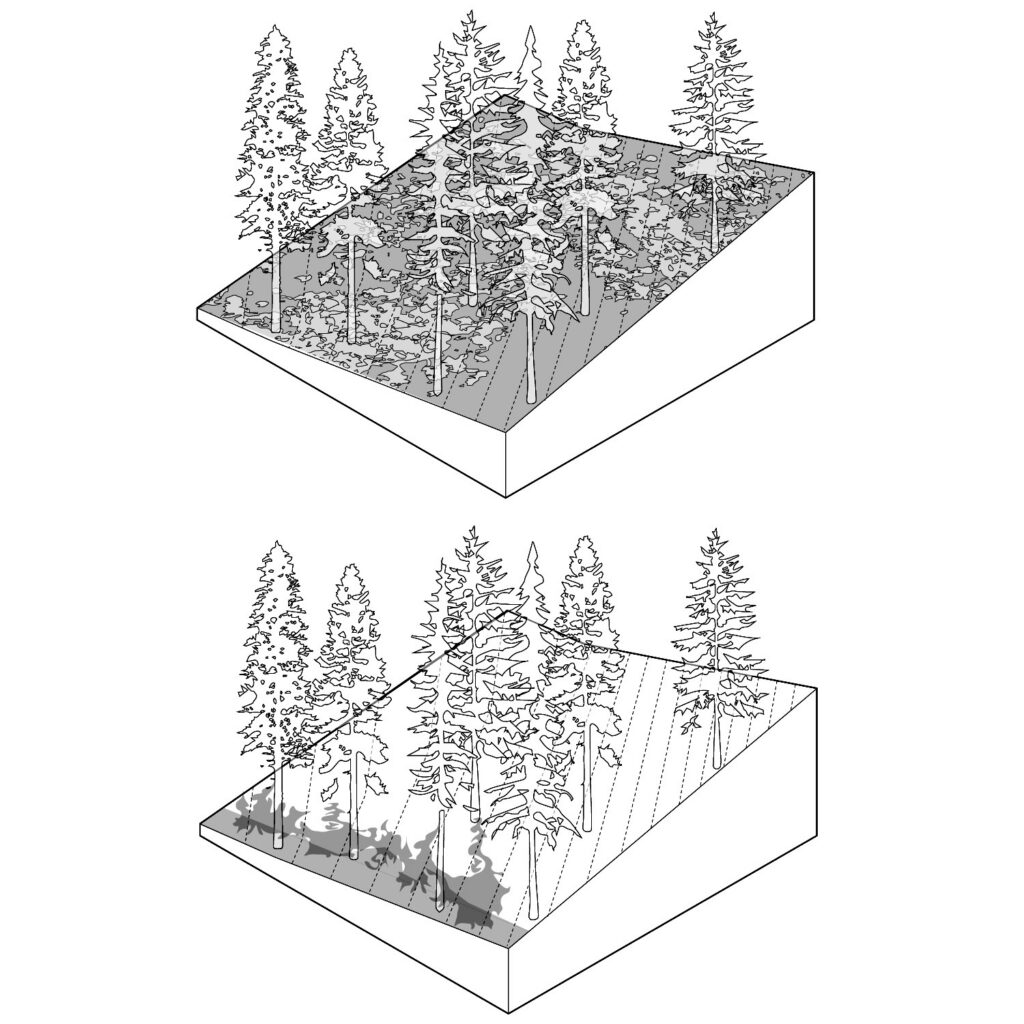
- Design by Fire – Emily Schlickman & Brett Milligan (UC Davis) A collection of speculative design projects and international case studies examining how communities can coexist with fire. This work reframes wildfire as both a threat and a dynamic ecological force in what researchers call the “Pyrocene”—the age of fire. (Image to the right)
Transdisciplinary Art & Collaboration
Artistic projects that bridge forest research science, art, culture, and long term care.
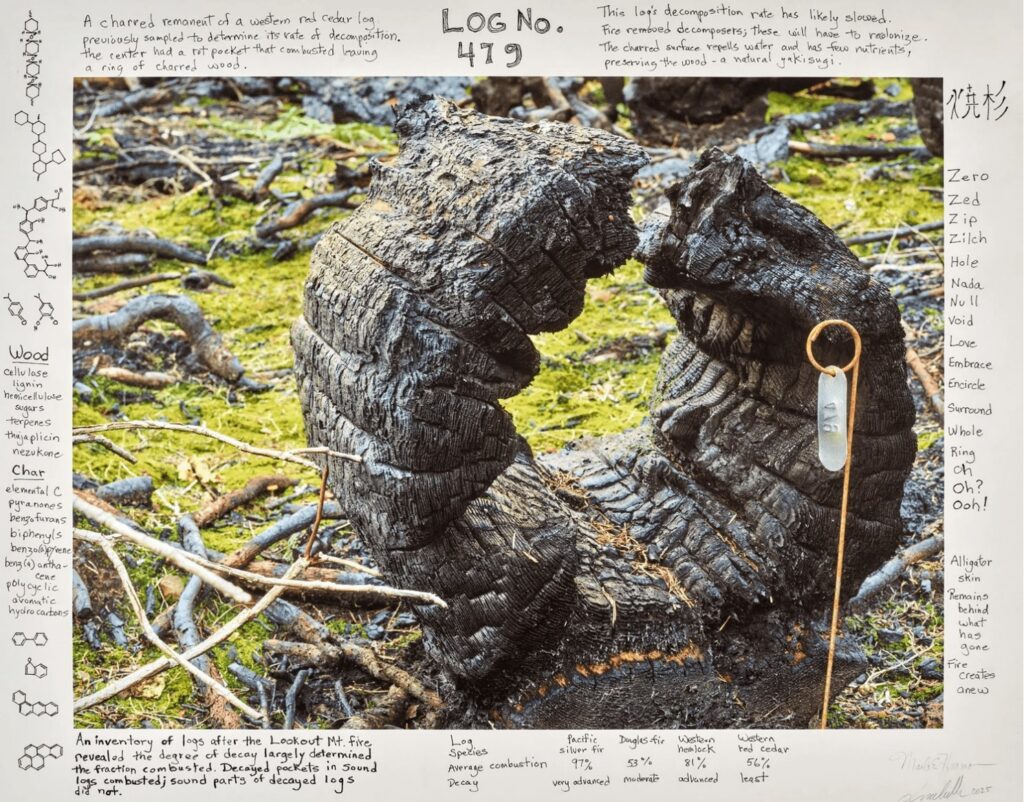
- 200 Year Decomposition Project – Ian van Coller Photographic documentation of long-term research at the HJ Andrews Experimental Forest, tracking how fallen trees decompose over decades. Created in collaboration with scientists and writers as part of the Naturalists of the Long Now project. (Image to the left)
- Ecologies of Care – Juniper Harrower, Reed College An art practice that blends ritual, research, and repair. This work views ecosystem health as a social issue intertwined with justice, power, and community, inviting reflection on how art can contribute to healing forest landscapes.
- Landscape Painting Analysis – Dana Warren & Harper Loeb (OSU) A study using 19th-century landscape paintings to understand historical forest conditions before modern scientific records existed. This project demonstrates how art can serve as ecological data and open new paths for art-science collaboration.
- Phoenix Eggs – Camila Buitrago, Yale School of the Environment Ceramic seed pods filled with native seeds, biochar, and written wishes for the future. Activated by fire, they slowly open to support regeneration and soil health, honoring Indigenous fire stewardship and reframing fire as a force for healing.



INTERESTED IN BECOMING A SPONSOR?
CONTACT US TODAY!
In this moment of climate uncertainty, World Forestry Center is leveraging creativity, art, and storytelling to spotlight forest-based solutions as an optimistic path forward. Forest Hope Through Innovation is designed to spark climate hope and inspire community-based approaches that support resilient forests for generations to come.
Related Posts
2026 Free Day Series at the Discovery Museum
Six Free Days for 60 Years To mark our 60th anniversary, World Forestry Center is launching a special Free Day Series in 2026, offering six free community days throughout the year as a way of thanking the public for six decades of support and engagement. This series…

Forest Hope Through Innovation: Call for Participation
Sep 30, 2025 | E xhibits, News Deadline: Monday, November 10, 2025, at 23:59 PST World Forestry Center seeks artists, foresters, researchers, architects, designers, engineers, and visionary thinkers to submit existing innovative forest-based research and solutions…