

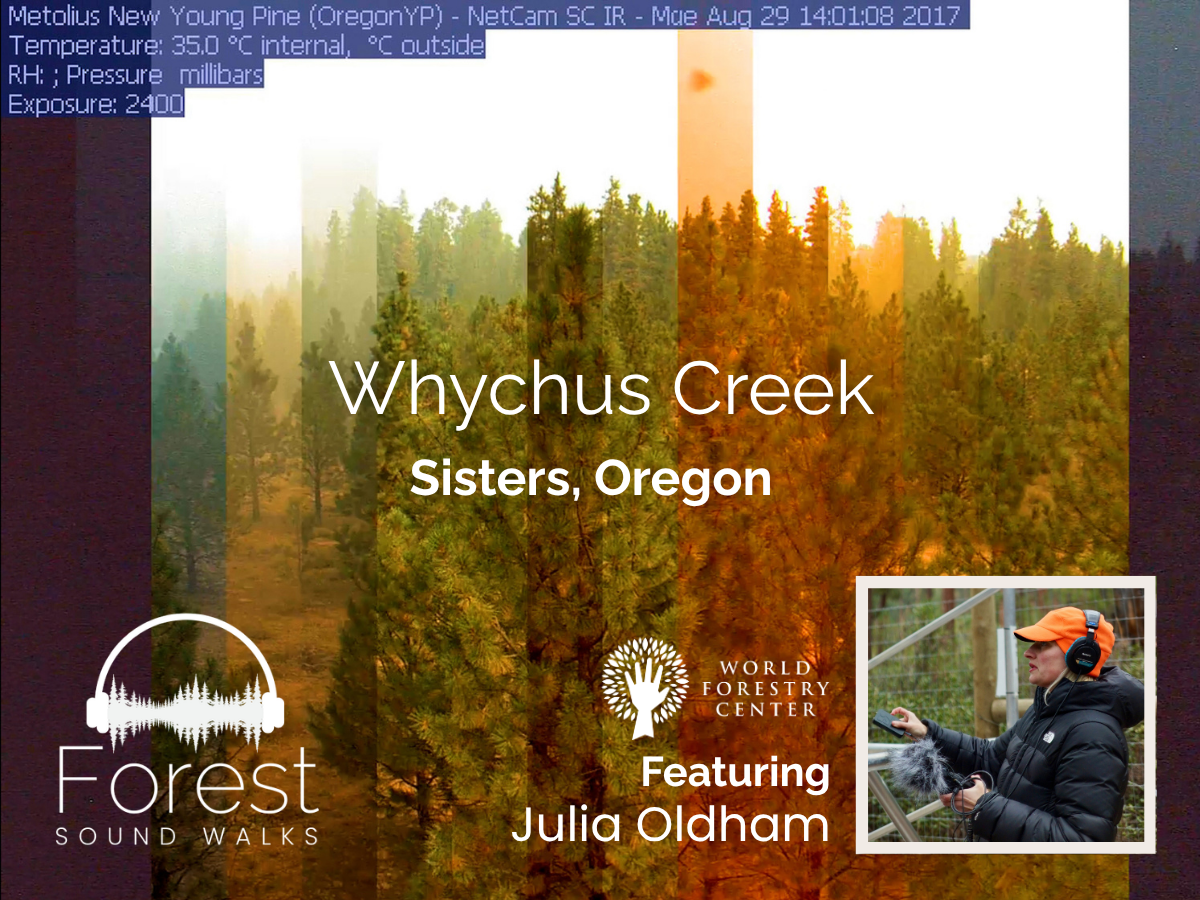
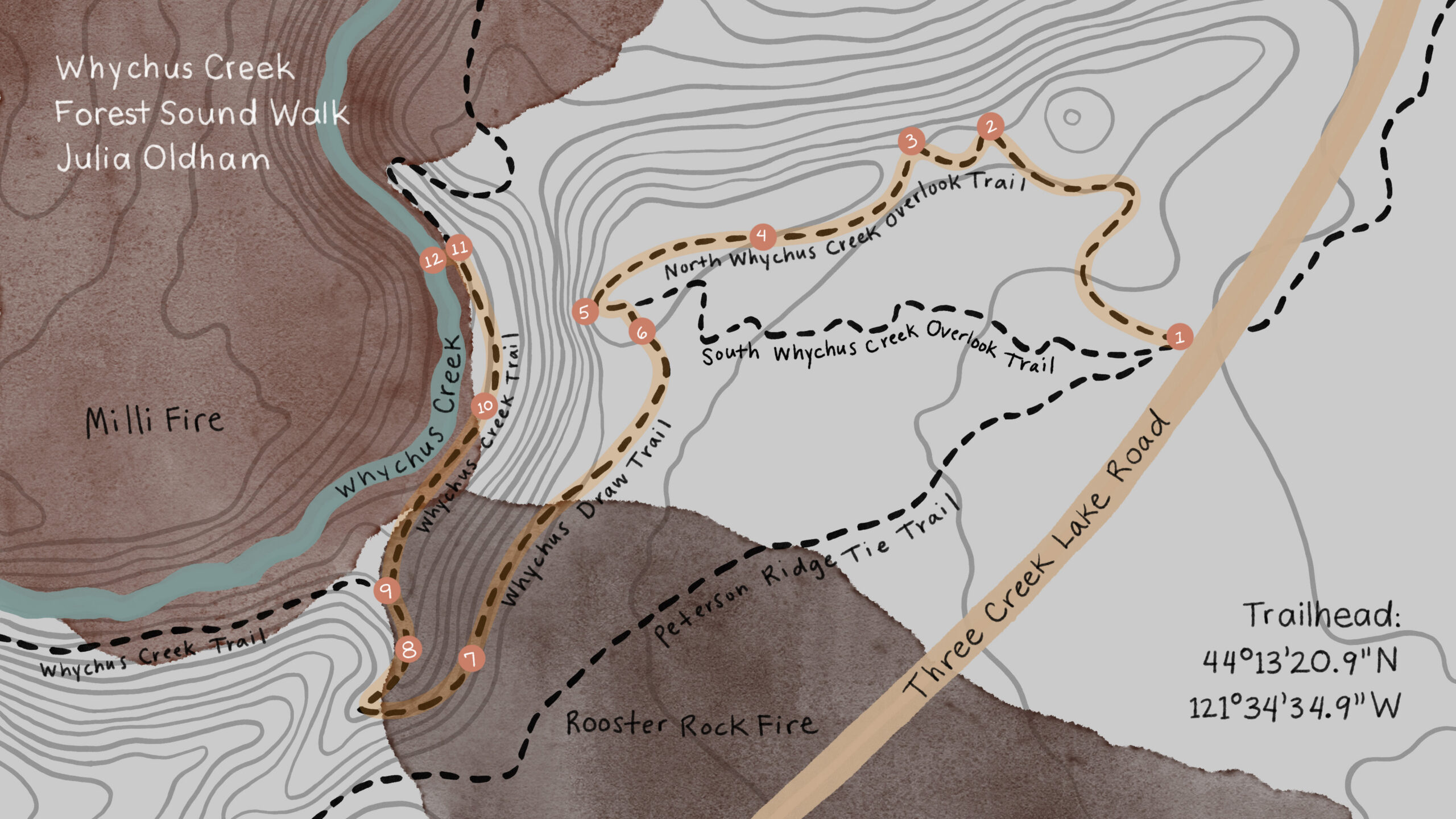
Trail: Whychus Creek Trail, Sisters, Oregon
Artist: Julia Oldham
Length: 39 minutes, aprox 2 miles
Note: family friendly, some steep sections
Julia Oldham is a video installation artist translating scientific forest data into immersive sensory environments exploring time and color. She sonified "canopy greenness" data from a network of phenocams and site specific recordings in a ponderosa pine forest near Sisters, Oregon.
PREPARE BEFORE YOU GO
Prior to departure and using a mobile device, we recommend you download the music, the map and forest guide to your phone or mobile device. Once you are on the trail, you might not have ideal reception to steam these files directly from our website. Depending on your device, you might need to keep it from going to sleep, so be sure to charge it before departure.
BE SAFE: Forest Sound Walks are immersive experiences, so do be mindful of your surroundings as you walk the trail and listen to the music. Wear sturdy shoes and bring all necessities you need for this out and back hike.
ABOUT THE CANOPY GREENESS SONIFICATION PROCESS
Through a multi-year collaboration with Dr. Christopher Still, Professor of Forest Ecosystems and Society at Oregon State University, artist Julia Oldham explored an analyzed color data extracted from forests in Central Oregon. In Whychus Creek Forest Sound Walk, a rising and falling music box tune sonifies 10 years of canopy greenness data. Download her guidebook to learn more about the scientific sound based process.
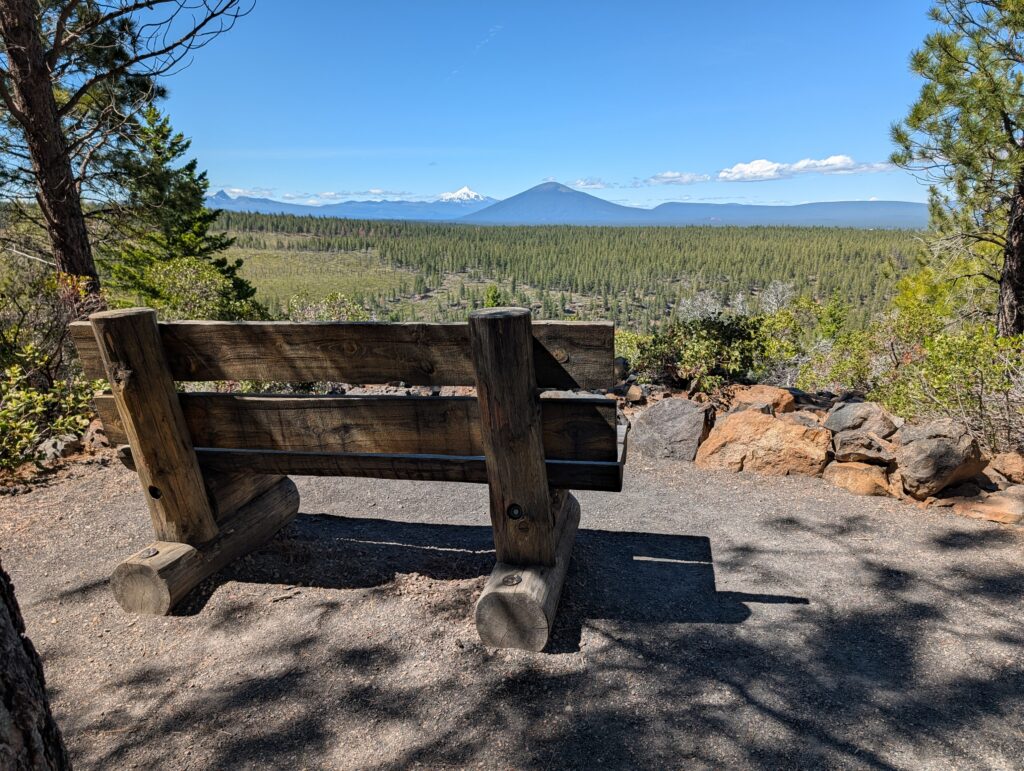
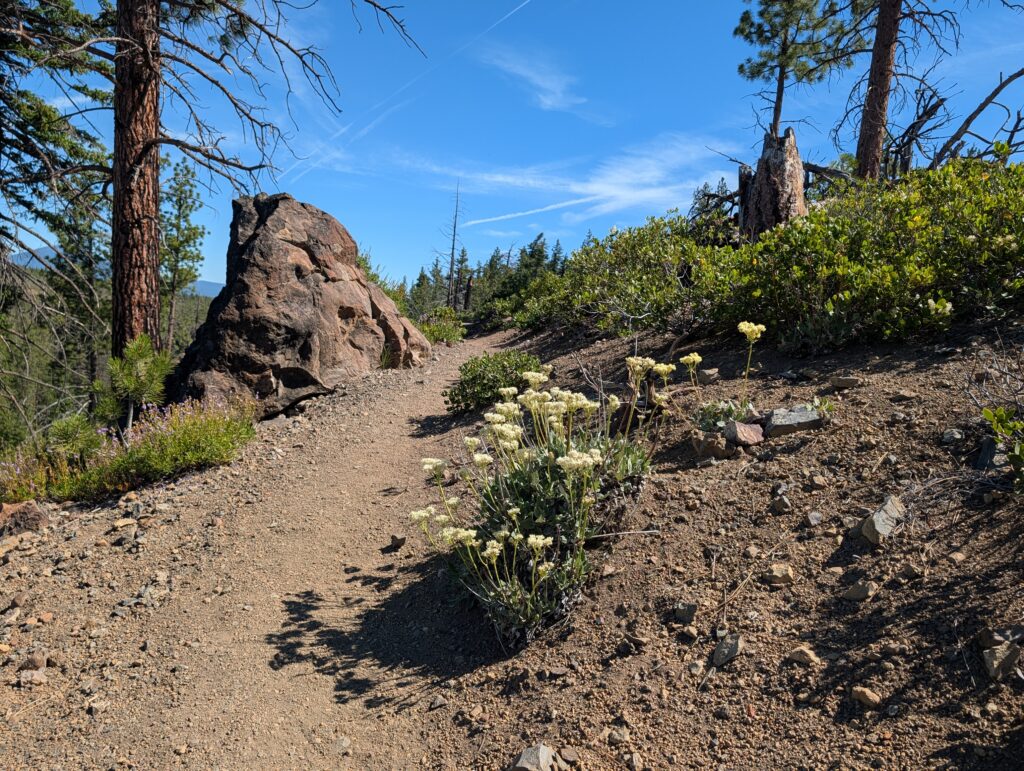
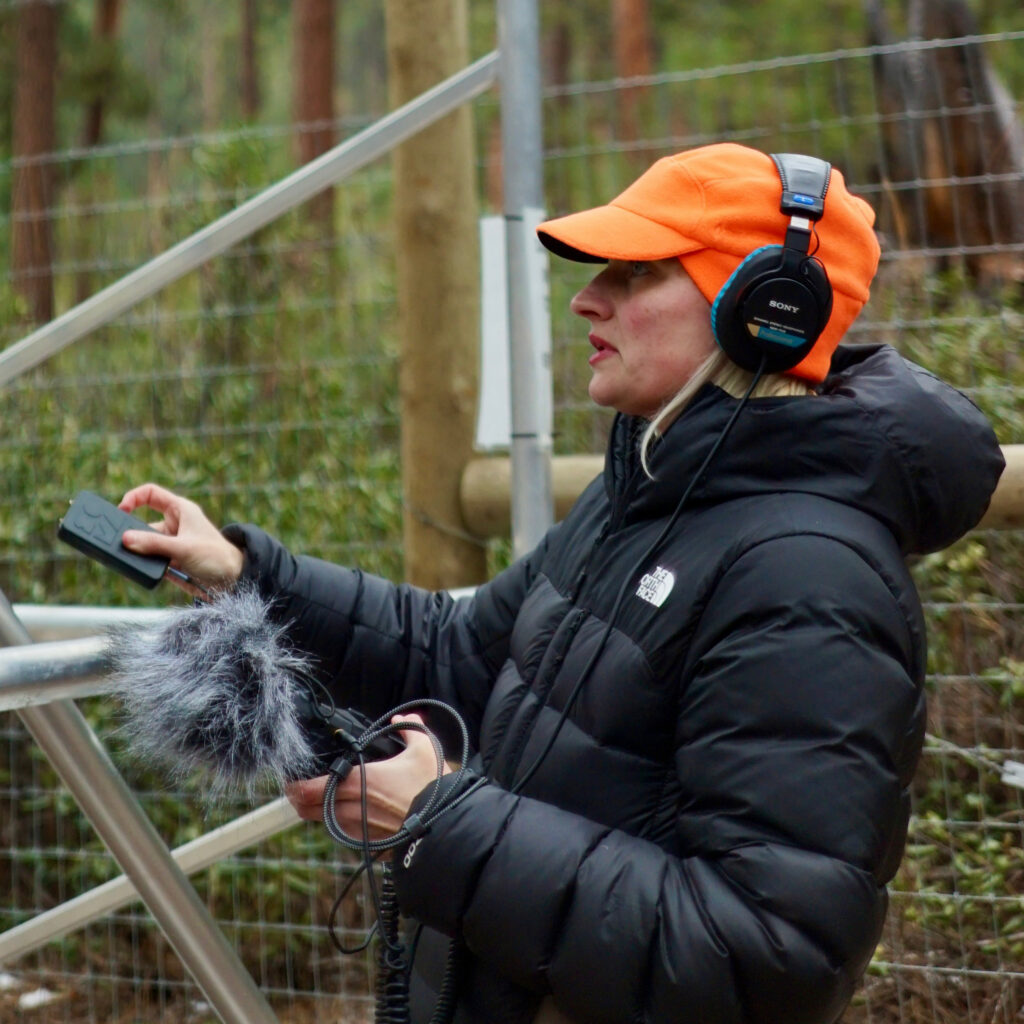
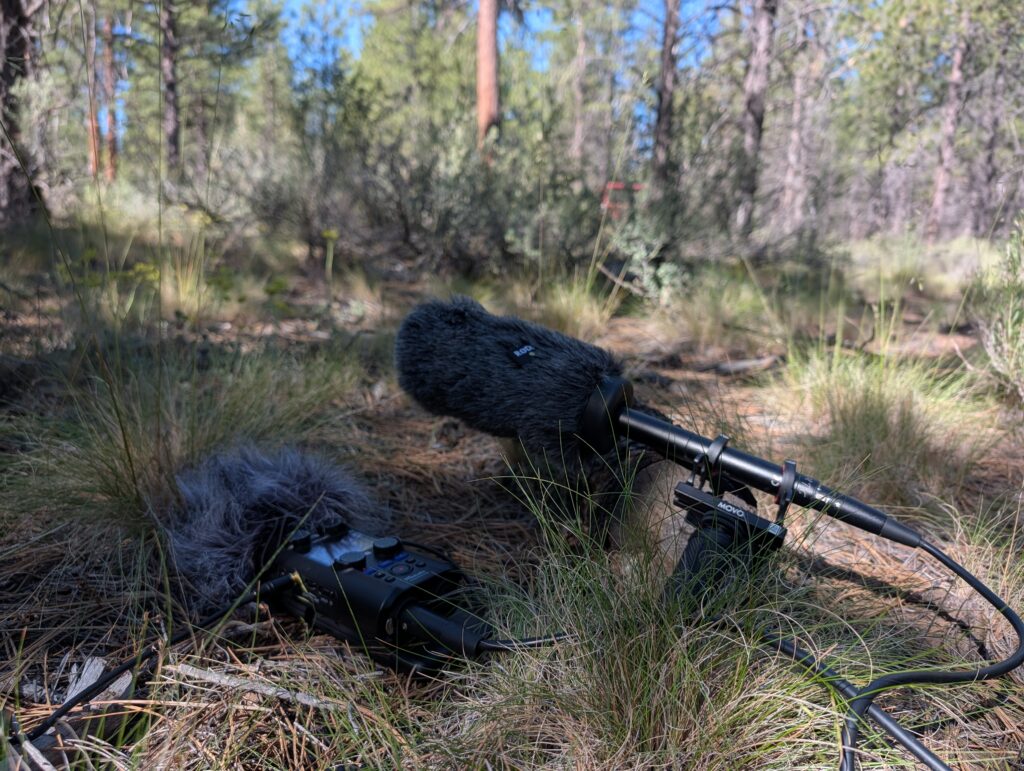
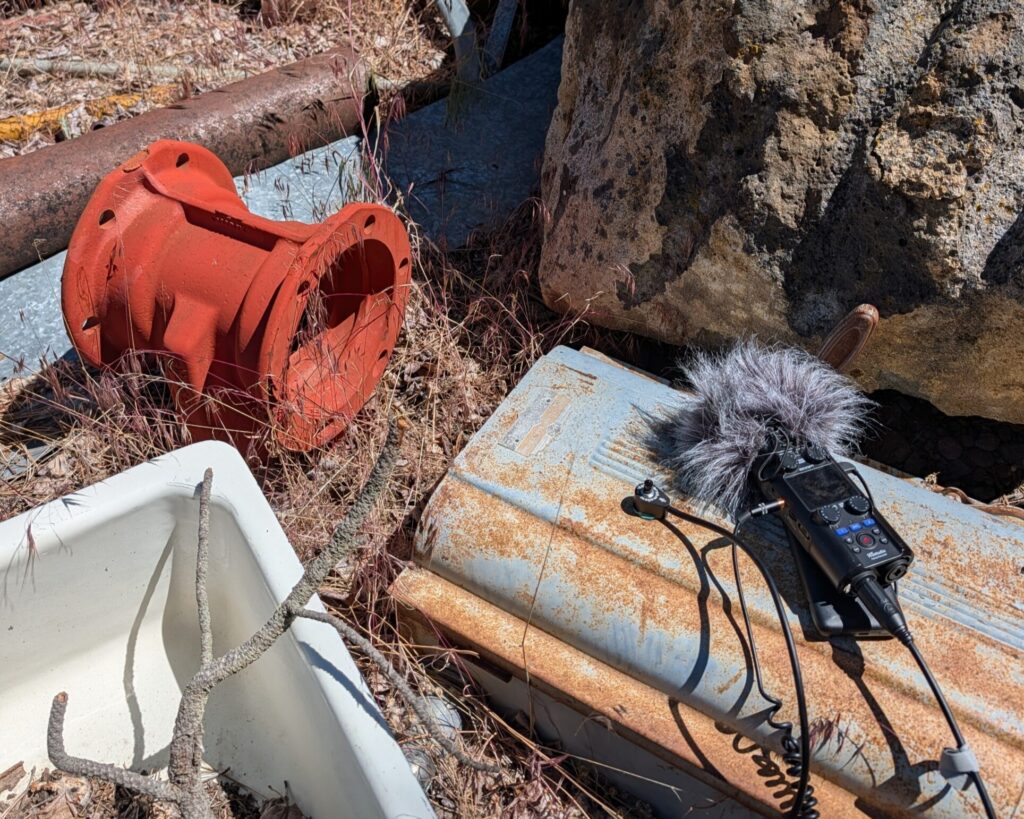
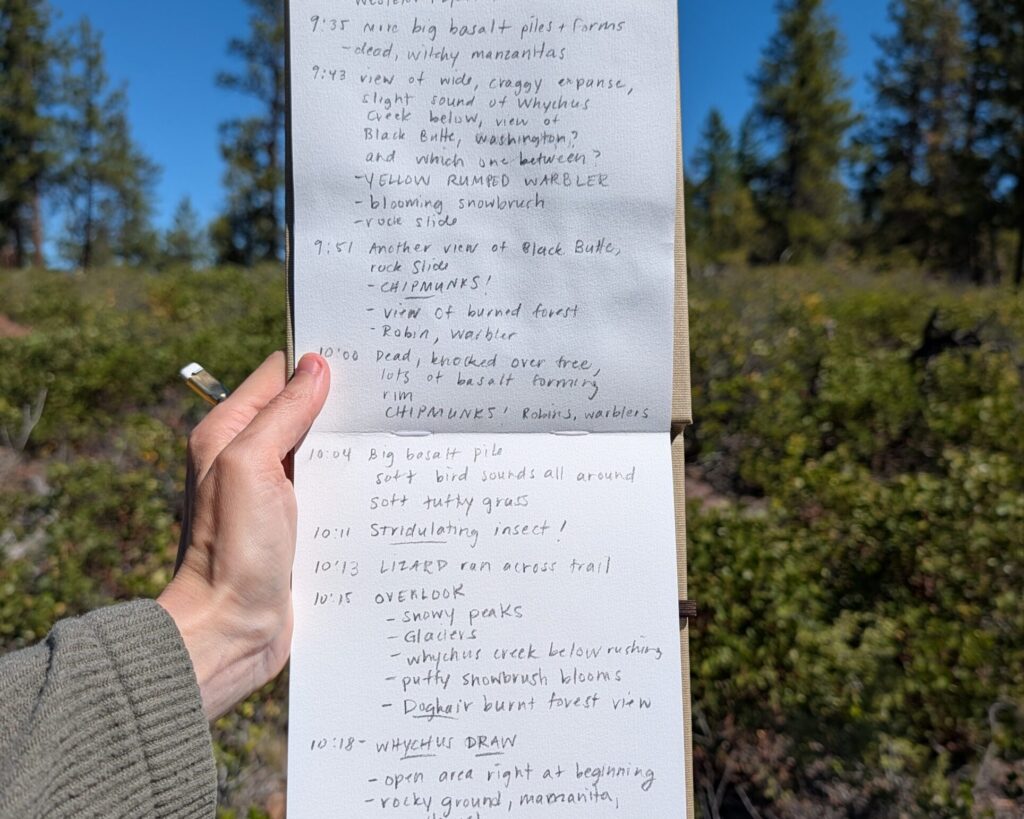
- The canopy greenness data set comes from the PhenoCam Network, which is made up of hundreds of cameras installed on research towers around the world. Cameras take a photo every 30 minutes and upload it to an online database, and these images help scientists observe phenological changes. Phenology is the study of cyclical events in nature, like budding, leafing, flowering and dying back. Through this project, Oldham analyzed daily images of a young ponderosa forest.
– To create a version of this data that can be heard, Oldham mapped the canopy greenness graph onto a hand-punched music box card and punched 10 years of data into the card. Feeding this card through a music box creates a tune that can be heard whenever Olham is walking through ponderosas in the Whychus Creek Forest Sound Walk.
LISTEN AND WATCH
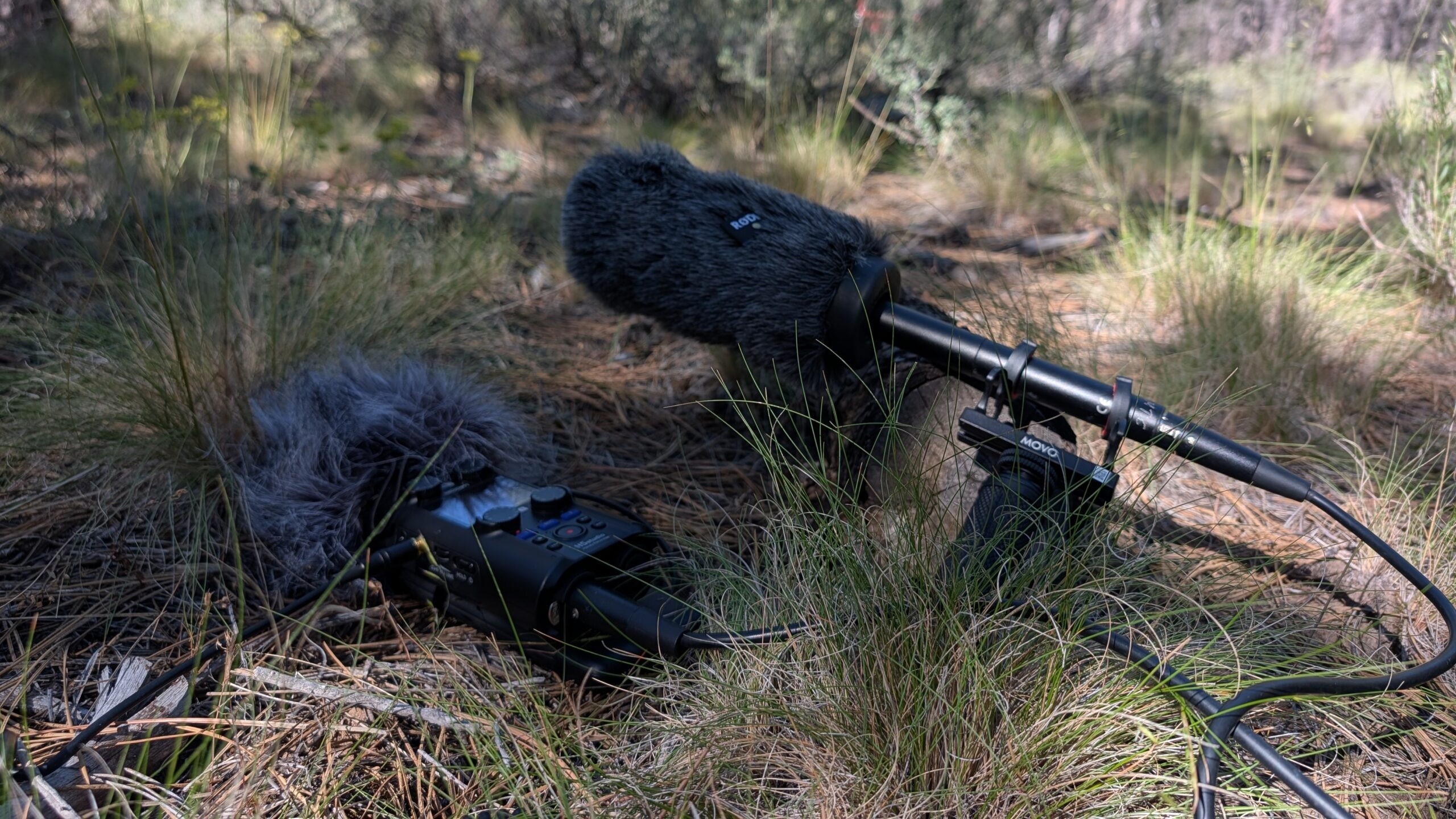
If you can't visit the trail to experience the sound walk in person, you are in luck. Oldham created a video of herself walking the forest. Captions will tell you what sounds she recorded and where she recorded it. Try to decipher which sound is made by Basalt rock, local birds, burnt branches, and the sonification of canopy greenness data.
ABOUT THE COMPOSER & VIDEO ARTIST
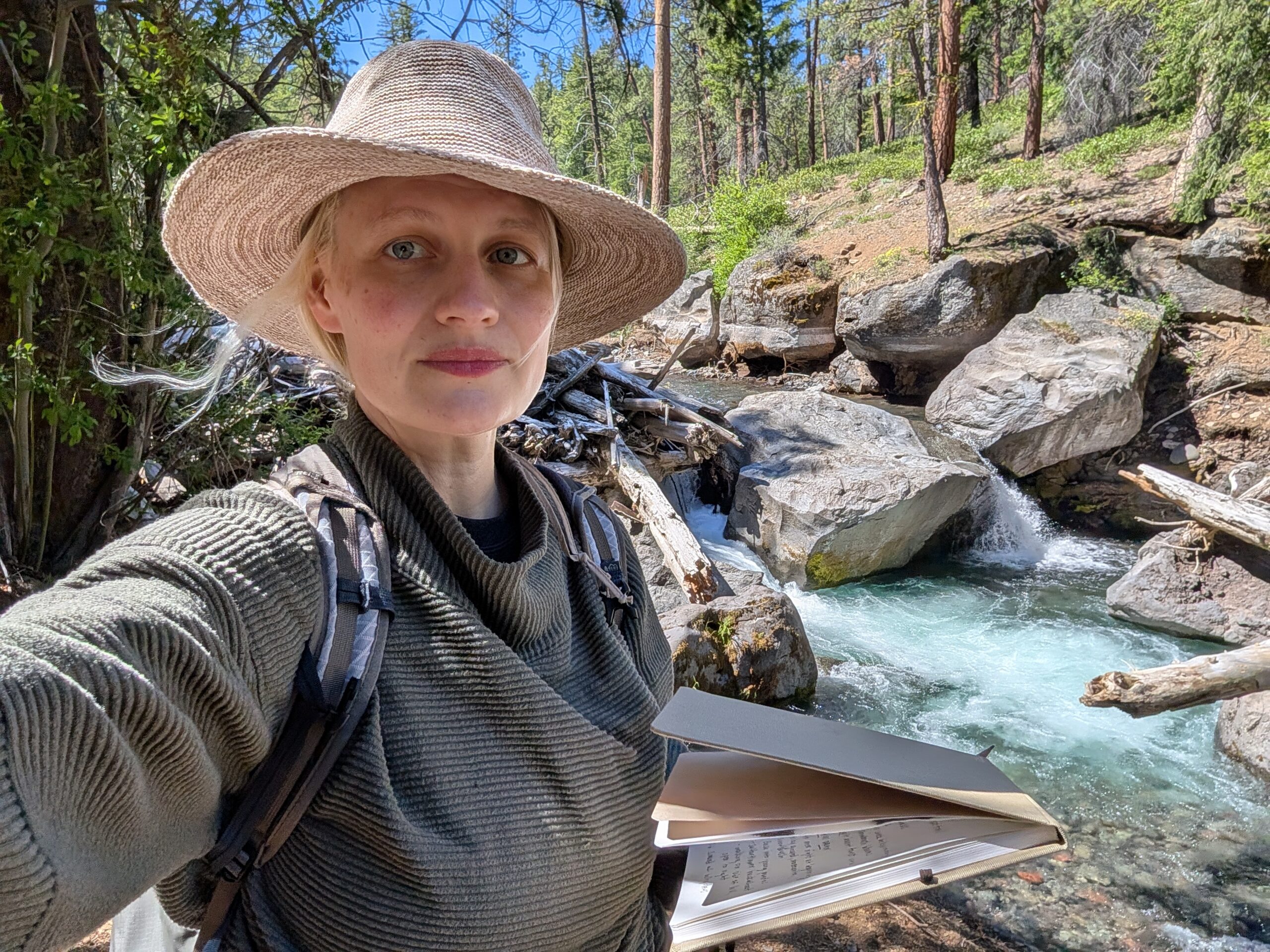
Working in a range of digital media, Julia Oldham visualizes the uneasy collision of nature and technology in a fragile world. She documents extant environments such as the Chernobyl Exclusion Zone in Ukraine, clear cut forests in Oregon, and swaths of derelict wilderness in New York City, and she also builds fictional worlds through drawing and animation. With tenderness and humor, Oldham explores her own conflicting feelings about human progress through her narrative works, envisioning speculative futures and exploring scientific history. The final works take the form of video installations, sound works and print projects. Her practice is research intensive, frequently involving scientists as collaborators.
Julia Oldham’s work has been shown widely, including exhibitions and screenings at the Queens Museum, Queens, NY; Smack Mellon, Brooklyn, NY; MoMA PS1 in Long Island City, NY; the Northwest Film Center at the Portland Art Museum, Portland, OR; the San Diego Art Institute, San Diego, CA; The Drawing Center in New York, NY; The Bronx Museum of Art in the Bronx, NY; The Museum of Contemporary Art in Chicago, IL; Oregon Contemporary, Portland, OR; and the Peabody Essex Museum in Salem, MA.
She has been supported by Artadia, the Fund for Art and Dialogue; NYC Urban Field Station; Artist in the Marketplace at the Bronx Museum of Art; the Lower Manhattan Cultural Council; the Oregon Arts Commission; The Ford Family Foundation; and the City of Chicago Department of Cultural Affairs. Her work has been reviewed in the New York Times, Washington Post, Wall Street Journal, and the Village Voice, and has been featured on the NPR shows “State of Wonder” on OPB and “Inquiry” on WICN.
Related Posts

Forest Sound Walk: Witch’s Castle with Bora Yoon & Third Angle New Music
Read the latest issue of our Evergreen magazine. Inside this issue: 2024: A Year in Review, Following Fire Art Exhibit, CANOPY: Forests + Markets + Society Recap, Welcoming New Board & Staff Members.
World Forestry Center announces Forest Sound Walks
World Forestry Center is proud to announce Forest Sound Walks, a new immersive audio-music series that invites hikers and nature lovers to experience forests through sound. Blending contemporary music, soundscape ecology, and forest storytelling, the series transforms...